New Labour Codes 2026: What Small Employers Must Know
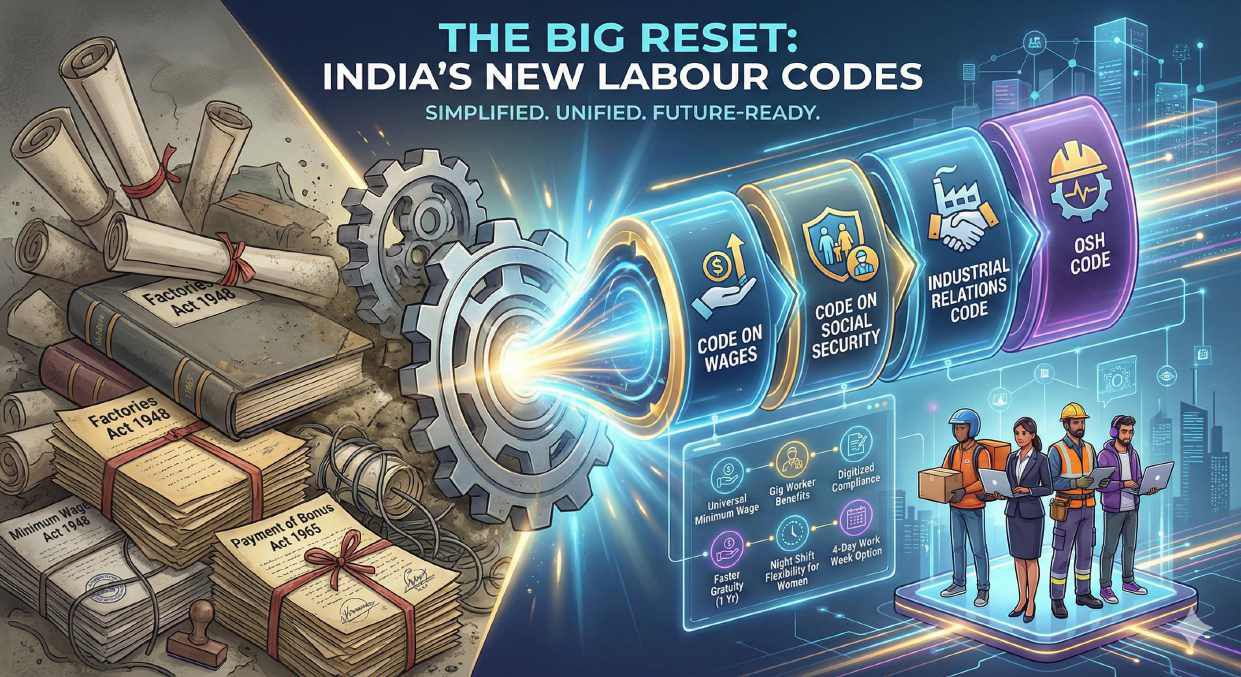
India's four new labour codes came into force on 21 November 2025, replacing 29 older labour laws. For small employers, the biggest changes are about how wages are defined, when they must be paid, how overtime is paid, and what records you keep. This guide summarises what matters for shops, factories and contractors.
The four labour codes
- Code on Wages, 2019: minimum wages, payment of wages, bonus, equal pay
- Code on Social Security, 2020: PF, ESI, gratuity, maternity, gig workers
- Occupational Safety, Health and Working Conditions Code, 2020: hours, leave, safety, contract labour
- Industrial Relations Code, 2020: standing orders, retrenchment, grievance committees
Key changes for small employers
1. Wages must be paid on time
- Daily-rated workers: at the end of the shift
- Weekly: on the last working day of the week
- Monthly: before the 7th of the next month
- When a worker leaves or is removed: full dues within 2 working days
2. A new definition of wages (the 50% rule)
Wages mean basic pay, dearness allowance and retaining allowance. If allowances excluded from wages (like HRA and conveyance) are more than half of total pay, the excess is added back to wages. This mainly affects businesses that split salaries into many allowances.
3. Overtime at double rate
Normal hours are capped at 8 hours a day and 48 hours a week. Overtime needs the worker's consent and is paid at twice the ordinary rate. See our overtime calculation guide.
4. Appointment letters for every worker
Every employee must get an appointment letter, including workers who were earlier hired with a handshake.
5. Deductions are capped
Total deductions from wages cannot exceed 50% of wages. Plan advance recoveries accordingly. Read how to track kharchi and advances.
6. Bonus, PF and ESI
- Statutory bonus: minimum 8.33% for eligible workers. See our bonus guide
- PF applies to establishments with 20 or more workers, and the EPF wage ceiling is now ₹25,000 a month. See our PF guide
- ESI applies across India to establishments with 10 or more employees. See our ESI guide
7. Leave and night work
- Earned leave: one day for every 20 days worked
- Women may work night shifts with written consent and proper safety arrangements
8. Fewer, digital registers
Many separate registers are being combined, and electronic records are encouraged. Inspectors are now called inspector-cum-facilitators, with more focus on guiding employers.
What small employers should do now
- Give every worker an appointment letter
- Pay wages on the new schedule, and settle exits within 2 working days
- Pay overtime at double rate, with consent
- Keep daily attendance, wage and deduction records
- Check whether PF, ESI and bonus apply to you
Keep compliant records with HajariBook
HajariBook keeps daily attendance, overtime, wages, advances and salary slips for every worker, and exports monthly muster rolls. That is most of the record-keeping the labour codes expect, done as you mark daily hajri.
Frequently asked questions
When did the new labour codes come into force?
On 21 November 2025. States are notifying their own rules, so details can vary by state.
Do labour codes apply to small shops?
The Code on Wages applies to all employees regardless of salary. Other parts, like PF or ESI, depend on the number of workers.
What is the deadline for paying monthly wages?
Before the 7th of the following month.
This is a simplified summary for small employers. Rules are being notified by states, so check with your CA or labour consultant for your situation.